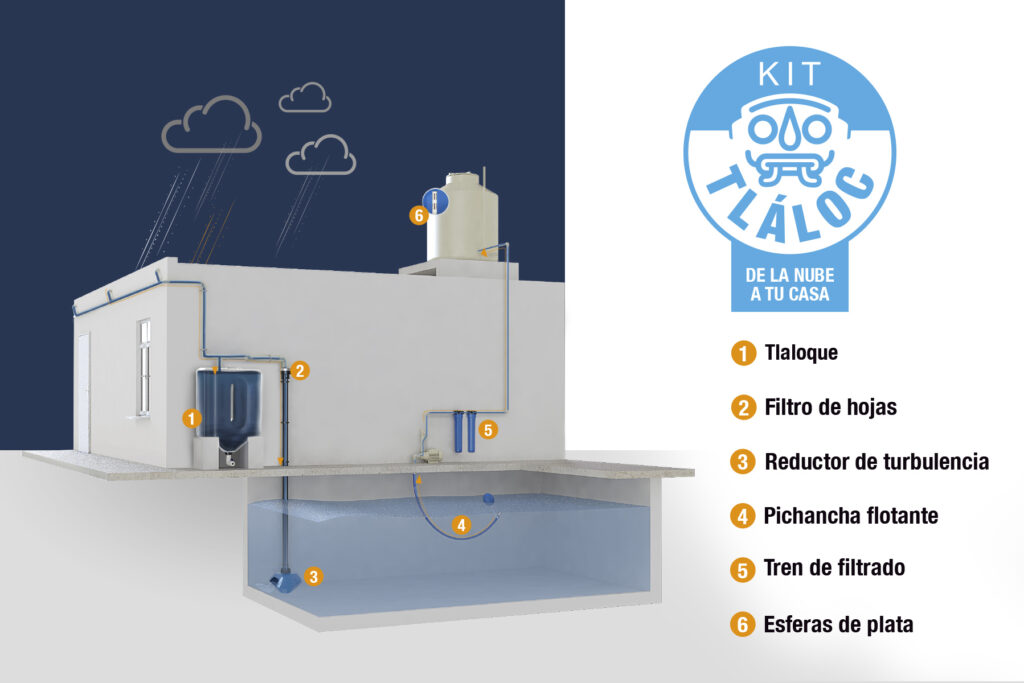
What are the essential requirements my home or business needs to install an RWH system?
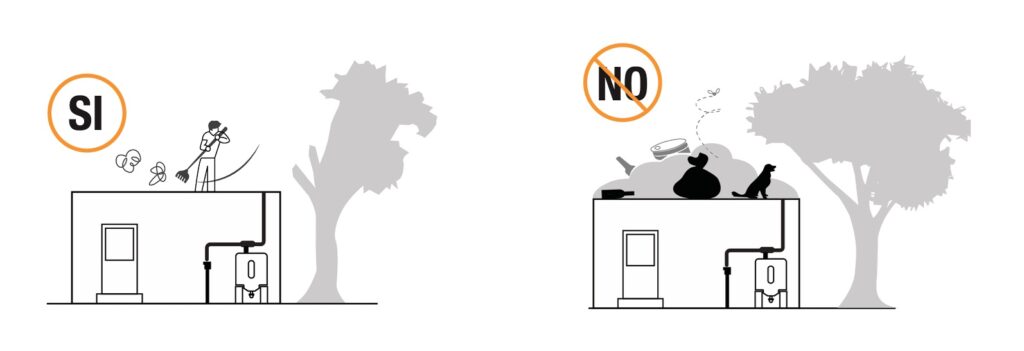
- The primary requirement is a suitable roof, as it is the main catchment surface and the initial source of potential contamination if not kept clean; therefore, it should be as clean and smooth as possible. It should not be accessible to pets or used for storage, and water must flow freely without obstruction or pooling.
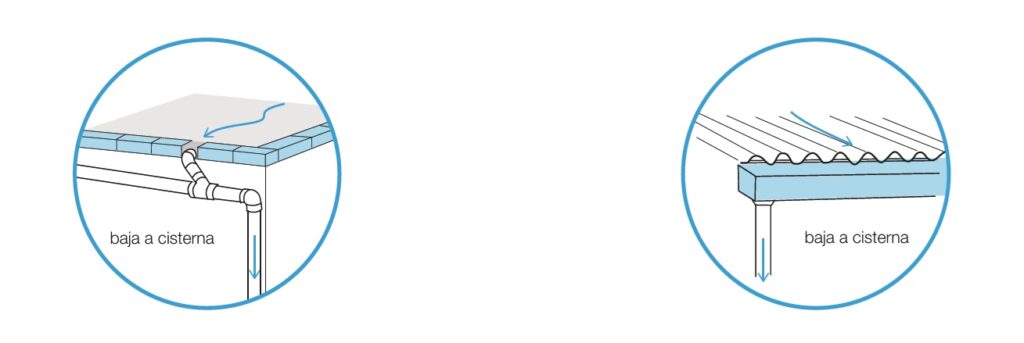
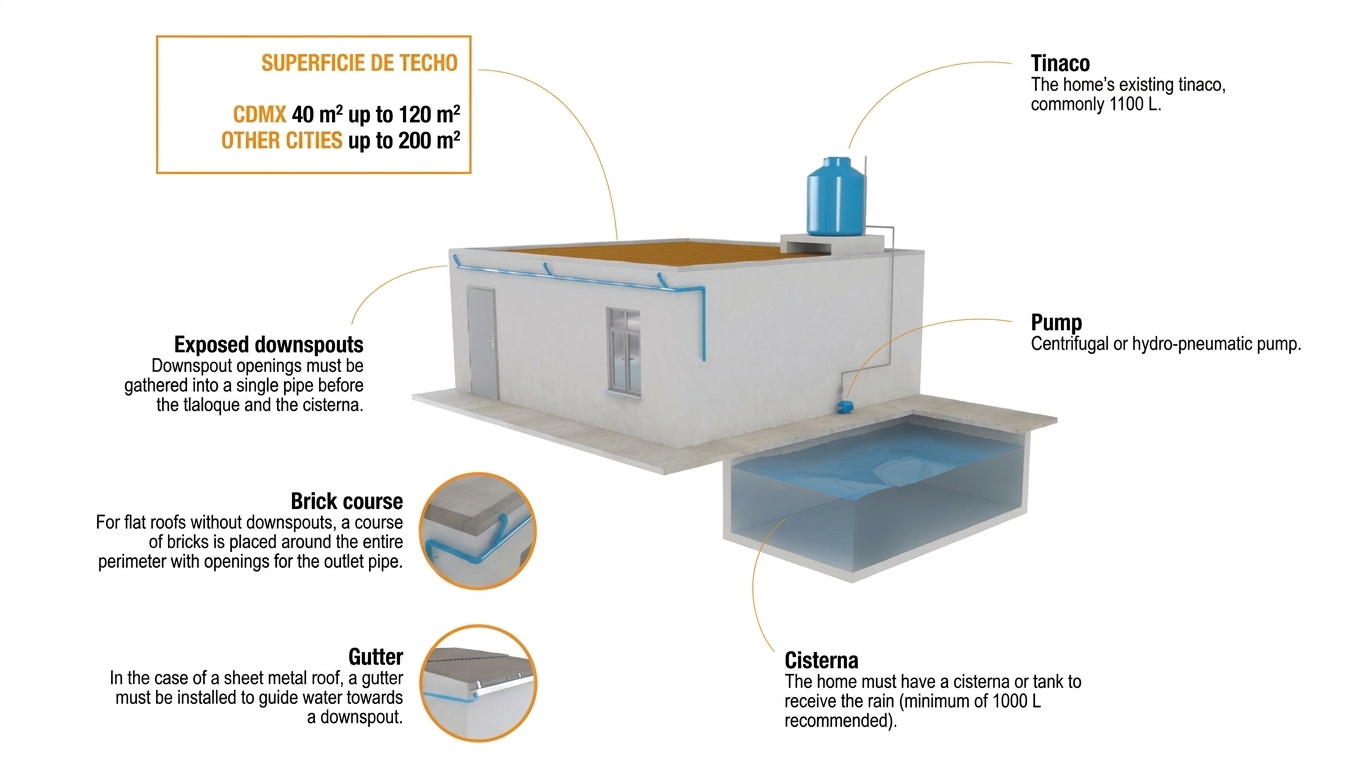
- Rainwater must be able to be channeled and directed toward a single point. Many buildings already feature drainage setups such as pipes, downspouts, and/or gutters. Existing downspouts will need to be adapted to converge into one line directed toward a suitable location for the rest of the system, including the storage tank or cistern. If water runs freely off your roof without any containment, it must be directed as follows so it can be brought together into a single pipe and routed properly.
For flat concrete slab roofs without downspouts, a single course of brick is laid along the perimeter where the drainage outlets will later be placed.
For pitched roofs, a gutter must be installed to channel the water toward a single downspout.
NOTE: Existing downspouts embedded within walls are not viable. Found in many buildings, these pipes often merge with sewer lines. Installing a harvesting system on them is not feasible; beyond requiring significant structural work to separate the rainwater from sewage, routing the water safely would mean running pipes straight through the home's interior, making the project cost-prohibitive.
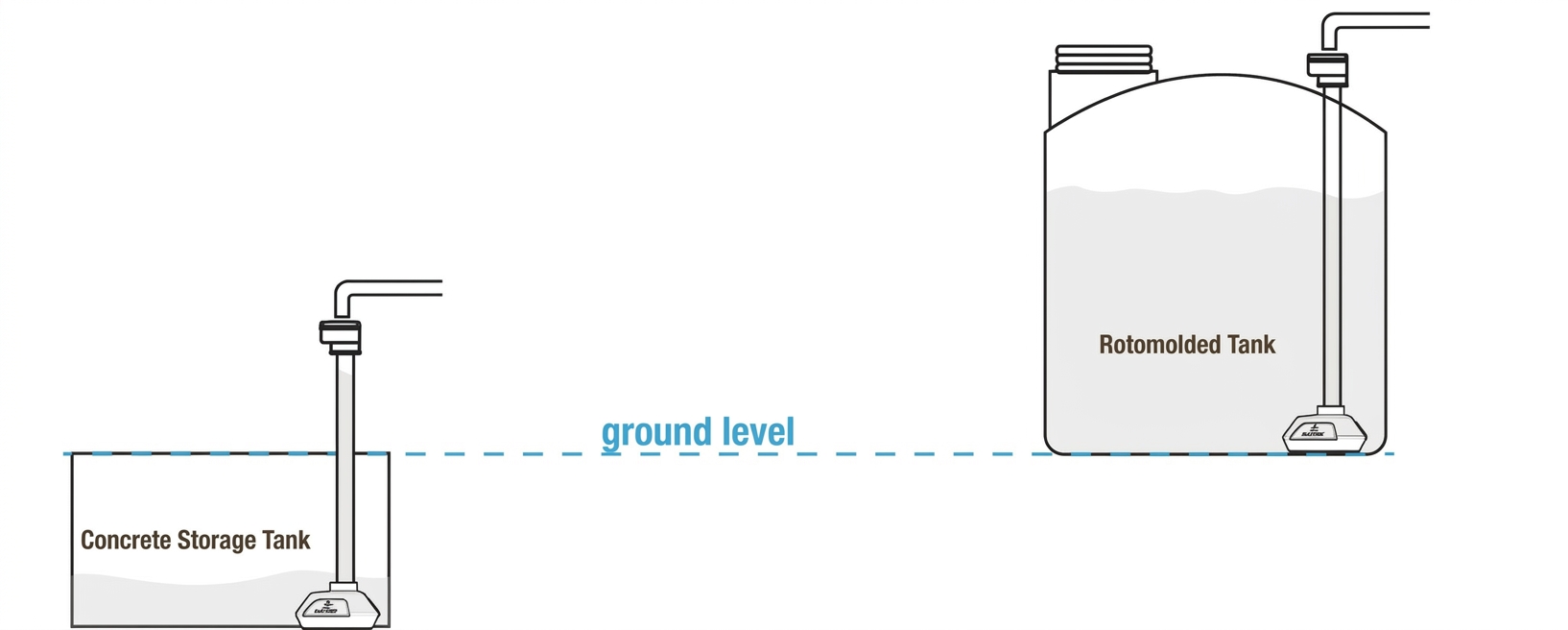
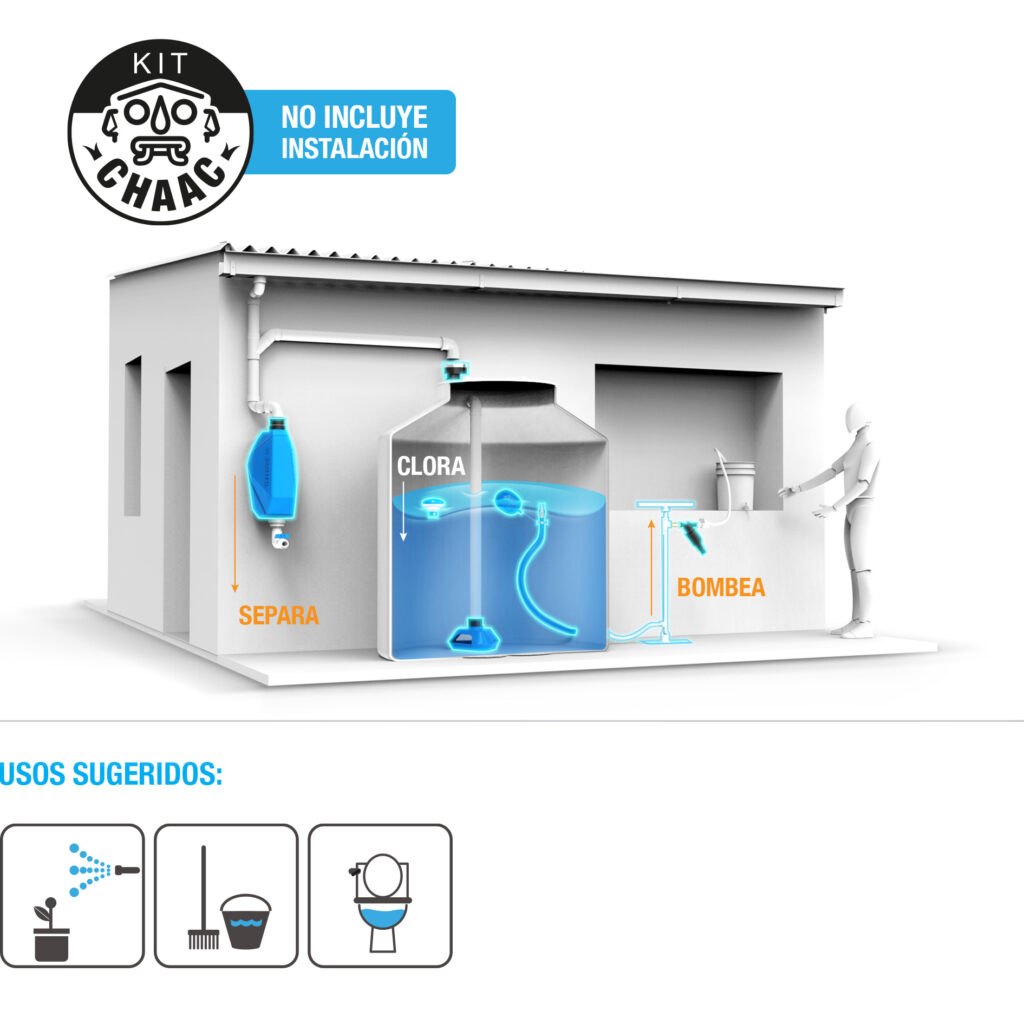
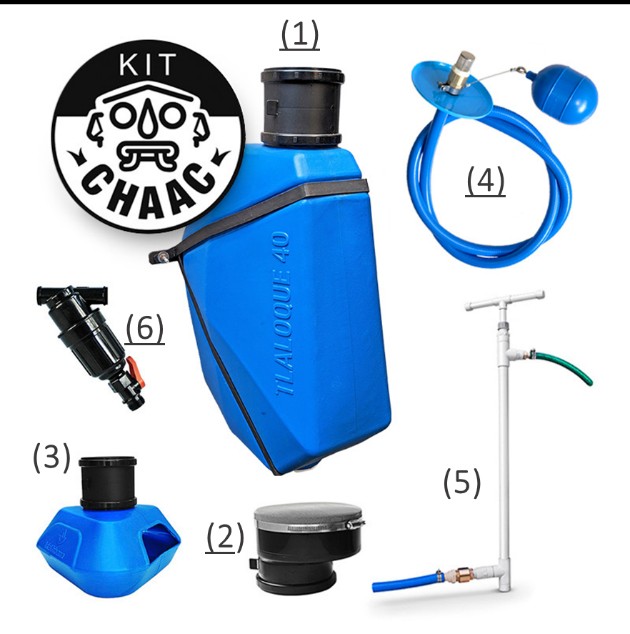
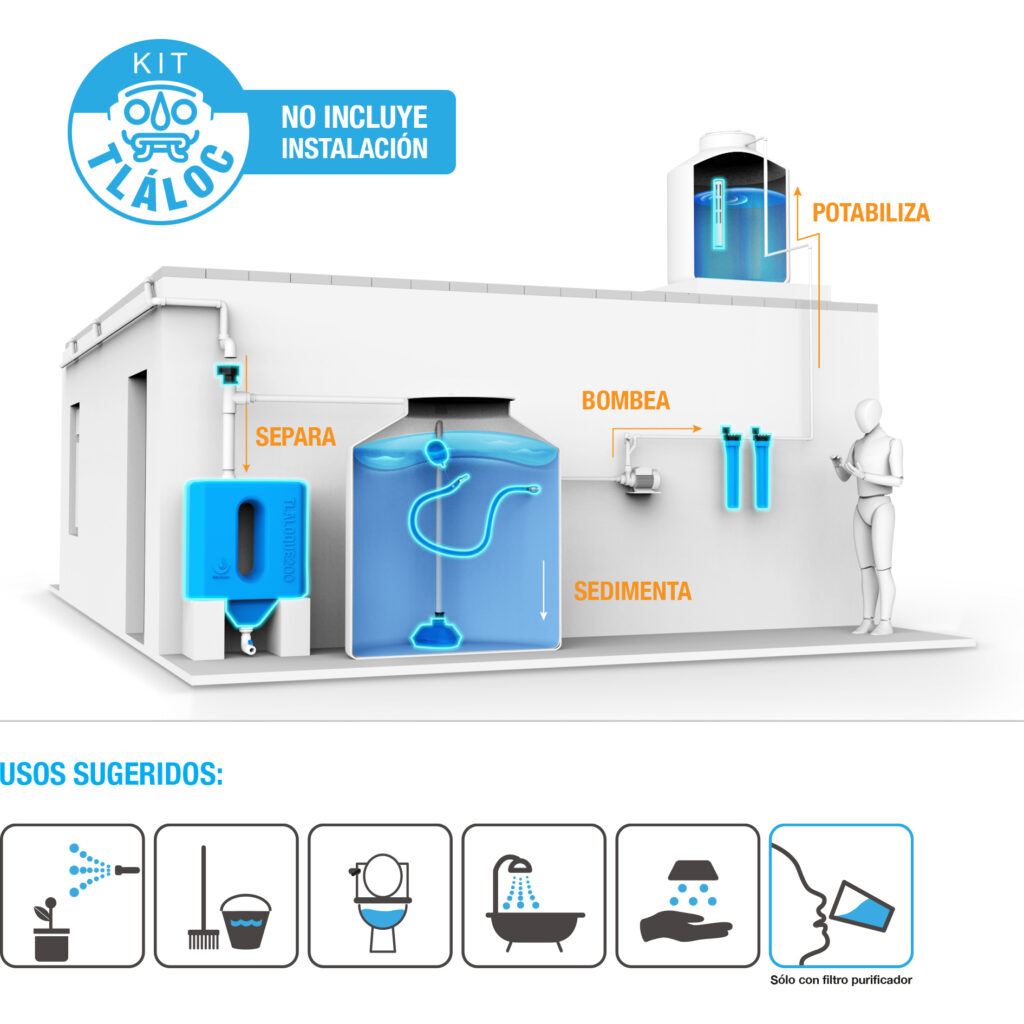
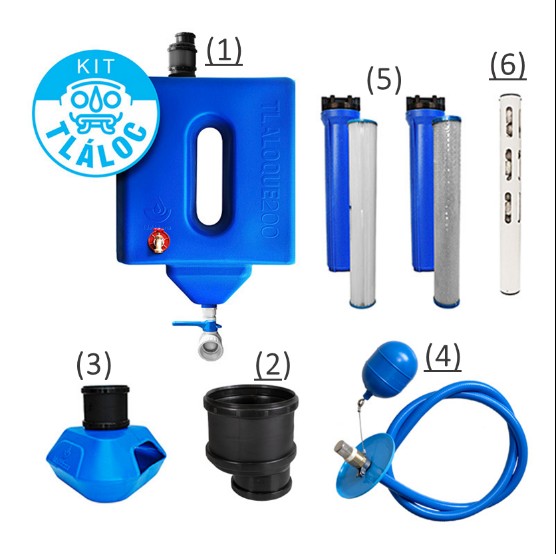
- Adequate space to house the rest of the system. You will need a first-flush diverter, Tlaloque (included in the Kit Tlaloc or Kit Chaac), and a tank or cistern to store the rainwater (you can use an existing one or purchase an additional unit). Once channeled and consolidated, the rainwater is directed through the Tlaloque diverter and leaf filter before reaching the tank or cistern. This storage unit can sit above ground or be buried, and it must have an overflow outlet at the top (fitted with a check valve for cisterns) to safely direct excess rainwater away and prevent flooding.
This is the most significant investment, yet it offers the longest lifespan. If you are planning a future build, be sure to account for the necessary footprint.
Capacities from 450 to 5,000 liters. Burying rotomolded cisterns is not recommended due to the risk of ground collapse when empty (consult your supplier).
What additional materials do I need to purchase that are not included in the kit for installation?
Your RWH system will require the following additional items (not included in the Kit Tlaloc and Kit Chaac): 1) rainwater downspouts, 2) brick course, 3) gutters, 4) centrifugal pump, 5) storage tank, and 6) cistern. If your home or business lacks any of these, you will need to source them to complete the installation.
In addition, standard site adaptation and plumbing supplies must be procured: piping and fittings, consumables, brackets and metal supports, masonry materials, etc.
Who can install my kit, and what skills are required?
At SustentHábitat, we offer complete installation services. If you prefer to manage it yourself, a trusted plumber or anyone with sound plumbing experience can handle the installation. We always recommend following the installation manual closely; our technical support team is just a phone call away if you need guidance.
I would like my system installed by a SustentHábitat trained and authorized technician. What is the cost of installation?
Installation costs vary based on the specific conditions of each site. A basic urban residential setup, covering all primary components, materials, and labor, starts at roughly $10,000 MXN (excluding tank, cistern, or pump) and ranges up to $25,000 MXN (which includes an above-ground tank and pump). Every project is quoted according to its unique needs.
How much water can my harvesting system collect?
It depends entirely on your region's average annual rainfall and the surface area of your catchment zone (usable roof space).
In Xalapa, where average annual rainfall is around 1,500 mm, each harvesting system can gather an average of 1,275 liters per square meter of usable roof. A 60 m² roof can yield around 51,000 liters of usable domestic water; an 80 m² roof yields a potential harvest of 102,000 liters per year; and a 100 m² roof can yield up to 127,500 liters annually.
What percentage of my water needs can be met by harvesting rain with an RWH system?
We recommend planning for a baseline consumption of 100 liters of water per person per day (the standard suggested by the UN and WHO), paired with a minimum catchment footprint of 20 m² per household member. Using these benchmarks alongside regional rainfall data, you can estimate how much self-reliance a family can achieve—often covering a substantial portion of their annual needs.
In the city of Xalapa, a family of 4 using 150 liters per person per day with an 80 m² roof can harvest 102,000 liters of rain each year. During that same timeframe, they will require roughly 216,600 liters of water, meaning harvested rain can supply nearly 50% of their annual consumption.
For a family of 3 using 150 liters per person daily with an 80 m² roof, capturing 102,000 liters during the rainy season against an annual demand of 162,450 liters, that harvested rain covers roughly 63% of their annual needs. For a single individual, that same harvest can satisfy nearly twice their yearly water demand.
Table. Water consumption per individual and family, and percentage covered by an RWH system on an 80 m² footprint.
| Individual | Family of 3 | Family of 4 | |
|---|---|---|---|
| Daily | 150 | 450 | 600 |
| Monthly | 4,650 | 13,950 | 18,600 |
| Annual | 54,150 | 162,450 | 216,600 |
| % of annual demand | 189% | 63% | 47% |
What is the expected lifespan of a system?
- The system is built to last an estimated 30 years outdoors. With proper shelter and regular care, it can serve you even longer.
- Filter cartridges typically last 6 months under standard water conditions; higher turbidity may shorten their working life.
- Calcium hypochlorite tablets for the Acualim chlorine dispenser should be replenished roughly every 6 months.
- Silver ionizing spheres should be replaced every two years.
- All other hardware only requires replacement in the event of wear or damage from ordinary use. On average, annual maintenance costs remain under three thousand pesos.
What is the routine maintenance required to keep my RWH system performing at its best?
- Choose the cleanest, smoothest roof surface available to connect to the system, and keep it clear year-round.
- Clear leaves and coarse debris from the leaf filter as often as needed.
- Maintain chlorine tablets or liquid in the chlorinator. Replace silver spheres every two years.
- Clean or replace filter cartridges as needed.
- Rinse out storage tanks and cisterns at least once a year, right at the close of the rainy season.
If I invest in a rainwater harvesting system, how long until it pays for itself?
Where water is brought in by truck (pipas), return on investment is typically seen within 2 to 4 years.
Where homes rely on municipal water, payback depends on local utility rates, generally spanning up to 10 years.
In Xalapa, a 10,000-liter water delivery truck costs roughly $1,100 to $1,500 MXN and meets the needs of a 4-person household (150 L/day/person) for about 15–16 days. Buying two trucks per month at $1,100 MXN equals an annual outlay comparable to installing your own catchment system. The difference is that an RWH system establishes dependable water autonomy right on your property for years of rainy seasons to come.
For a family of four living under an 80 m² roof with Xalapa’s typical rainfall (1,500 mm annually), the harvest reaches around 102,000 liters per year. The investment in a harvesting system ($10,000 to $25,000 MXN installed) matches what would otherwise be spent on two water deliveries a month over one year ($26,400 MXN) to manage shortages.
To determine your exact monthly water use, take a close look at your recent utility bill and compare it with these figures. It is straightforward: take your bimonthly total, divide by two for your monthly consumption, and multiply by six to see what you need across the rainy season months.
How is a dry toilet installed?
Installing a bucket dry toilet is remarkably simple—it requires no plumbing or drainage work. The toilet can be placed anywhere and can seamlessly replace a traditional flush toilet. If you choose to replace your conventional toilet with a dry one, you will need a plumber to remove the existing fixture, cap the pipes, and install the dry toilet in its place. We recommend keeping a flush toilet available for a transitional period, allowing the whole family to become comfortable and smoothly make the shift toward sustainable sanitation.
What happens to the feces?
Your waste will no longer go down the sewer, and you will stop wasting and polluting water by leaving the flush behind. The waste (solids and liquids mixed with the sawdust used to cover them) is collected in the bucket placed inside the toilet. Once the bucket is full, it is emptied and taken to a safe site for composting. Through the composting process, the waste transforms into high-quality, nutrient-rich, safe, and pathogen-free fertilizer. The finished compost can be used on trees and shrubs, though it should not be applied to vegetable crops or root vegetables.
What happens to the urine?
If you choose a urine-diverting model, solid waste collects in the bucket while urine is routed directly to a liquid storage container. Urine makes an excellent fertilizer for vegetables, trees, and shrubs when diluted at a ratio of 1 part urine to 10 parts water. It is especially beneficial for fruit trees and generally very straightforward to use. Apply it directly at ground level.
What about toilet paper?
One of the great benefits of a dry toilet is that toilet paper can go straight into the bowl. It collects alongside the rest of the organic material and composts naturally. While toilet paper is biodegradable, we always recommend using unbleached, natural kraft-paper options.
I love the idea, but what if I don't have space for composting?
At SustentHábitat, we will offer a waste collection service. If you opt for this service, all you need to do is remove the bucket from the toilet and seal it with its lid. If your toilet diverts urine, you simply remove the liquid container when full as well. We collect the waste and provide you with clean buckets and fresh cover material.
What if I decide to make my own compost?
You will need a small footprint of at least 2 x 1 m and a compost bin set up in your yard. The composter must have a solid lid to keep rainwater out. When the bucket fills up, simply remove it, empty the contents into the composter, and cover them thoroughly with soil and leaf litter.
Wait, how do I actually build the compost pile?
Composting is done as follows:
- Place a base layer of leaf litter about 10 cm deep at the bottom of the composter. On top of this, add a second 10 cm layer of straw, dry leaves, or dry grass clippings.
- Empty the contents of the dry toilet bucket directly into the center of the composter and cover it completely with straw, leaf litter, or dry grass, making sure the deposit is entirely “encapsulated.” Each time you add a new bucket, part the cover material in the center, deposit the fresh material, and cover it thoroughly again. ALWAYS ENSURE THE DEPOSIT REMAINS FULLY “ENCAPSULATED.”
- To clean the bucket, add a scoop of sawdust, scrub the interior with a standard toilet brush, and empty that into the compost. Next, pour in half a cup of white vinegar and scrub again, making sure to coat the entire inner surface. Add another scoop of sawdust to absorb the vinegar, then wipe it clean with a small squeegee to remove any remaining sawdust. Done! The bucket is clean and sanitized.
- The primary requirement is a suitable roof, as it is the main catchment surface and the initial source of potential contamination if not kept clean; therefore, it should be as clean and smooth as possible. It should not be accessible to pets or used for storage, and water must flow freely without obstruction or pooling.
Won't waste accumulating in the bucket and composter create bad odors?
Neither the toilet nor the composter emits foul odors, thanks to the natural cover material used in the bowl (lightly dampened sawdust) and in the compost bin (leaf litter, straw, dry grass, etc.). When waste is properly covered, these materials act as an effective biofilter, keeping odors completely sealed in.
Does the finished compost really work as fertilizer? Human poop sounds repulsive...
Once properly composted, human waste is no longer poop—it has transformed into a high-grade, pathogen-free solid fertilizer with the earthy look, scent, and texture of forest soil. Through the natural biological process, all recognizable traces of waste are gone. This transformation takes about 6 to 12 months in the compost bin. The finished compost can nourish trees and shrubs, though it should not be used on edible garden crops or root vegetables.
What other materials can I add to the compost?
You can add virtually any organic waste, except meat, dairy, fats, oils, diseased plants, excessive citrus, or cooked foods—these can attract pests, create unpleasant odors, and slow down decomposition. To maintain a healthy compost pile, always keep plastics, metals, glass, and chemically treated materials out.
Can I add dog or cat feces?
While it is possible, pet waste is best handled in a separate dedicated composter, or by utilizing a specialized pet waste collection service.
What if a family member or guest has a urinary tract infection and uses the dry toilet?
If you know or suspect that someone with a urinary tract infection has used the dry toilet, store the urine container in the shade for 30 days. This holding time naturally eliminates any pathogens.
Can it be used in urban areas?
It can be installed anywhere. The bucket model is ideal for existing homes and apartments. If you lack the outdoor space for a compost bin, our doorstep collection service has you covered.
Can they be used in rural areas or on a ranch?
Dry toilets are ideally suited for rural settings, eco-tourism projects, countryside retreats, ranches, and off-grid campsites without sewer connections, as well as arid regions facing drought and water scarcity.
How much water can I save by switching from a traditional toilet to a dry toilet?
On average, a person uses the bathroom 7 times a day, flushing away up to 16 liters of clean water each time. Traditional flush toilets use 10 to 16 liters per flush. Newer low-flow models consume 6 liters or less, while dual-flush models—popularized in recent years—use roughly 3 and 6 liters for liquids and solids, respectively. Even assuming a modest 6 liters per flush, one person uses roughly 42 liters of water every day just flushing the toilet—that is 1,260 liters a month and 15,120 liters a year.
A family of four therefore flushes around 60,000 liters of drinking water down the toilet each year. On average, the toilet accounts for 40–50% of total household water consumption, and that water—laden with human waste—is largely discharged into rivers, lakes, and ultimately the ocean.
Helpful Links
What is a watershed? From cloud to tap: the journey of our water – Isla Urbana
From the clouds to our homes, water undertakes a remarkable journey across our watershed. Understanding this cycle helps us protect our water at its source.
Understanding our watershed is the first step toward securing a water-resilient future.
Saving water with dry toilets – Isla Urbana interview with Jeinny Solís – WCEco
The volume of water saved—and kept clean—through this practical alternative is extraordinary. In this interview, Jeinny Solís, founder of WCEco, discusses our broken relationship with human waste, its root causes, and how dry toilets offer a grounded, hopeful answer to the water crisis.
“Living sustainably in the city is possible” – Isla Urbana interview with Dora Napolitano
Among the thoughtful systems at Dora's eco-home are rainwater harvesting, a dry toilet, water-saving fixtures, composting, and a compact constructed wetland for greywater treatment. Practical projects built steadily over the years, showing us how accessible that vital first step really is.